Food & BeverageCarbon Source Dosing (Sodium Acetate/Methanol/Glucose)
Mengniu Wuhan Dairy - Jin'yinhu WWTP Negotiated Indirect Discharge Project (1,500 m³/d carbon-source pipeline)
Project Info
- Treatment Capacity
- 1,500 m³/d (approximately 455,700 tons/year)
- Location
- China Hubei Wuhan Dongxihu District, from the plant of Mengniu Dairy (Wuhan) Co., Ltd. to Jinyinhu Wastewater Treatment Plant
About
Dairy effluent is organic-rich, highly biodegradable and non-toxic. For the producer it is a disposal cost; for a municipal plant short of carbon it is a scarce resource. Wuhan's Dongxihu District connected the two ends: in early 2026 the city's first negotiated indirect discharge framework between a food manufacturer and a wastewater plant was signed, sending pre-treated Mengniu dairy effluent through a dedicated on-site pipeline to Jin'yinhu WWTP, displacing purchased carbon sources such as sodium acetate.
Background
Mengniu Dairy Wuhan runs 18 ambient-dairy lines producing 190,800 tonnes a year, and generates 475,000 tonnes of high-strength organic wastewater annually. Treating it to current standards in-house cost more than RMB 2 million a year. A few kilometres away, Jin'yinhu WWTP struggled with low influent COD - its microbes were underfed, forcing it to buy carbon to raise biodegradability. One side had excess carbon, the other a deficit.
Policy and approach
China's Food Processing Industry Water Pollutant Discharge Standard (GB 46817-2025) took effect on 1 January 2026 and explicitly allows a discharger and a centralized treatment operator to agree concentration limits, which are then ratified into the discharge permit - removing the legal uncertainty that had blocked such deals. A dedicated task force formed by the Wuhan Eco-Environment Bureau's Dongxihu branch and the district water authority held more than ten on-site reviews, breaking the clause into responsibility boundaries, technical assessment and an implementation plan, and screening risks around effluent quality, sewer operation and liability.
Works
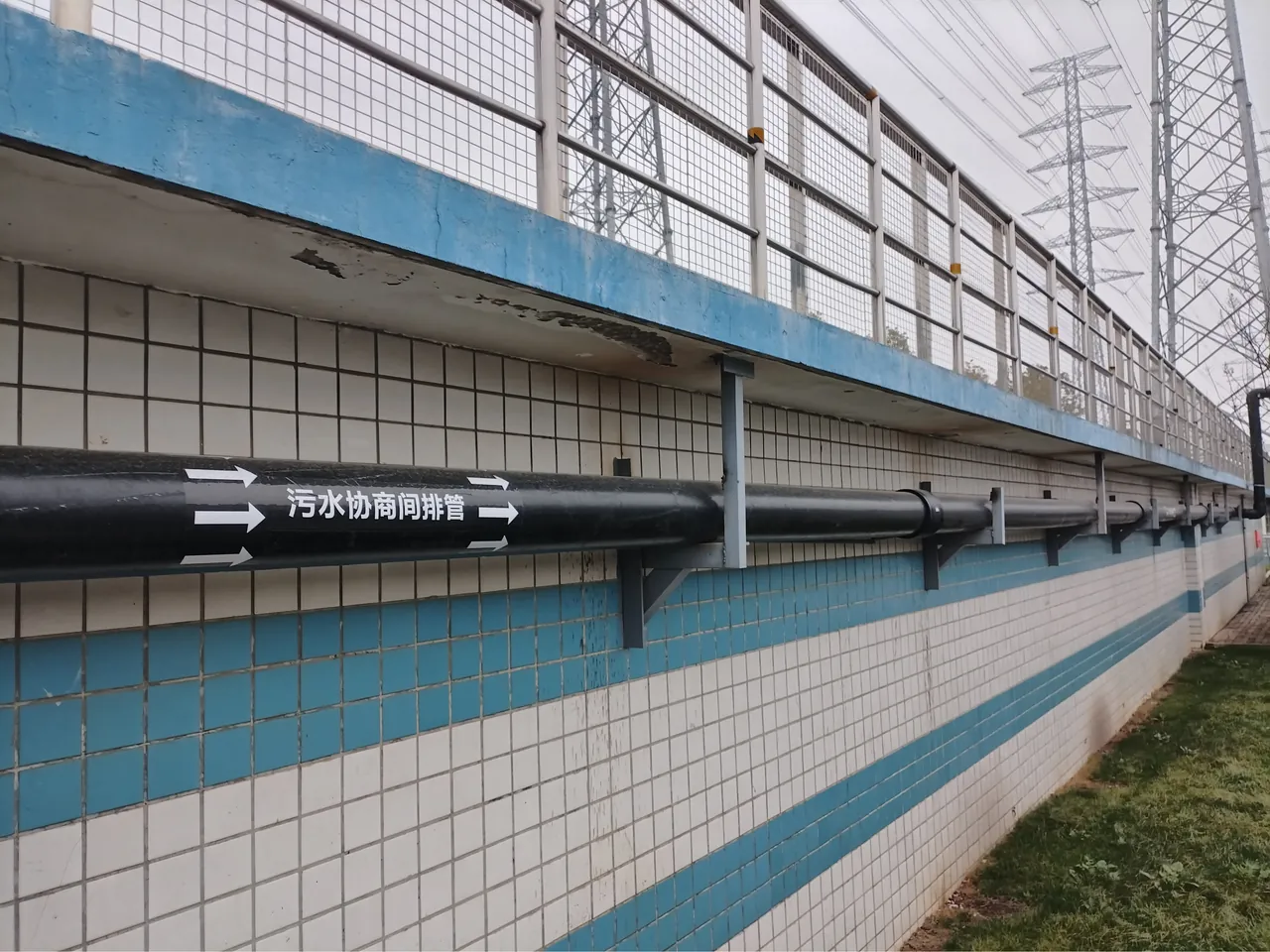
Because dairy effluent swings with production batches and raw milk quality, the team designed a pre-treatment package: a hydraulic screen to trap solids and an equalization tank to smooth concentration peaks, which addressed the plant's main concern. A 96-metre dedicated negotiated-discharge pipeline was built inside the plant, clearly marked along its length, with real-time water quality monitoring at both inlet and outlet linked to the environmental regulator's online system. The company also added holding capacity and a closed-loop emergency response so abnormal loads can be diverted before reaching the sewer.
Results
About 1,500 tonnes of dairy wastewater now flows through the pipeline to the municipal network each day, roughly 455,700 tonnes a year. During trial operation the plant's influent and effluent quality stayed stable and met expectations. Mengniu avoided building its own advanced treatment; Jin'yinhu cut its carbon purchases; and together the two sites avoid nearly 400 tonnes of CO2 a year on top of direct cost savings.
Sources: Hubei Daily, "One Pipeline Builds a Bridge for Pollution and Carbon Reduction", 9 February 2026, https://news.hubeidaily.net/pc/c_5128896.html
Image: the dedicated "negotiated indirect discharge" pipeline inside the Mengniu Wuhan dairy plant, carrying pre-treated effluent to Jin'yinhu WWTP (Source: Hubei Daily)
Technologies
- Hydraulic screen pretreatment
- Equalization tank for flow and load balancing
- Dedicated on-site transmission pipeline
- Online water quality monitoring with networked data at inlet and outlet
- Wastewater temporary storage and emergency regulation
- Negotiated indirect discharge limit management
Oct 27, 2026